In collaboration with Annabelle Wang, Annalisa Welinder, and Caroline Zeng.
This project was developed for Stanford University’s CS 147 (Introduction to Human-Computer Interaction Design) in Autumn 2022. It was 10-week class on the design process, where teams of students conducted needfinding, ran user studies, and created low-fi, med-fi, and high-fi prototypes.
Scroll down to the “Final Deliverables” section to see our final product.
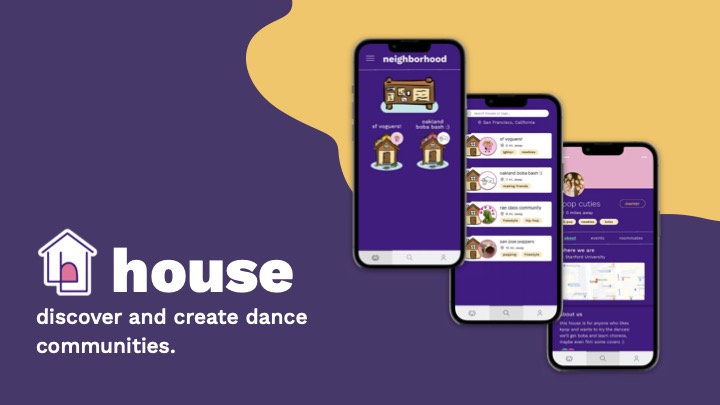
Overview
The Problem
Dancers who are not in dance teams want community, but struggle to find them solely in classes.
Our solution
A centralized platform for dancers to connect with each other outside of teams and classes.
Needfinding
Interviews
We used our contacts in our own dance communities to find dancers in the bay area and cross-country who were at different experience levels and stages of life. We interviewed on campus and at a nearby dance studio with boba as compensation.
Synthesis
To synthesize our findings, we created empathy maps for each interview. From these maps, we constructed the POVs and HMWs listed in the next section. To the right is one of our empathy maps:
The second round of interviews confirmed our initial findings from the first round: dancers want to find communities outside of dance classes and college teams.

POVs + HMWs
We came up with 3 POVs with their accompanying How-Might-We’s (HMWs).
POV 1
We met Participant 5, a recent college graduate who danced and choreographed on teams in college and is now taking dance classes independently all over the bay area. We were surprised to notice that he has a very structured day-by-day process of how he chooses who he wants to take class from each week, but also sometimes decides to take classes from people he watches and meets randomly in classes that he searches up after class. We wonder if this means he cares deeply about how he utilizes his time each day when figuring out where to take class. It would be game-changing to give him an effortless experience where he can personalize and structure his schedule.
From this POV, we asked: How Might We…
- help people find positive takeaways from classes they take?
- help dancers find classes worth taking?
- let dancers take more classes?
- make people talk to each other in dance classes?
- we make dance classes an entirely social experience?
POV 2
We met Participant 3, who was highly involved in the college dance community and is now dancing with a studio called EDS after graduating. We were surprised to notice that he said good blocking (putting dancers in formations) should make the choreography interesting, yet he himself wanted to invest minimal effort in the process while still reaping its benefits. We wonder if this means that he sees blocking as a ‘necessary evil’—a process to endure to create an artful end product. It would be game-changing to make blocking more enjoyable, simple, and less tedious.
From this POV, we asked: How Might We…
- make blocking the most interesting part of the choreography process?
- make blocking the most fun part of the choreography process?
- make blocking not necessary for choreography?
- reduce repetitive steps in blocking?
- introduce other rewards for good blocking?
POV 3
We met Participant 5, a recent college graduate who danced and choreographed on teams in college and is now taking dance classes independently all over the bay area. We were surprised to notice that he misses his old dance team communities where he felt close and connected to others and feels like finding a dance community post-grad is far harder than it was in college as a shy person. We wonder if this means he struggles with finding a community now as an adult living on his own. It would be game-changing if class culture was more of a shared and collaborative experience than just a solo experience.
From this POV, we asked: How Might We…
- make people feel they are not alone if they attend classes solo?
- help people reconnect with their old dance communities?
- help dancers find communities outside of socializing in classes?
- encourage people to take more classes?
- let people create their own dance communities?
Implementation
Design Solution
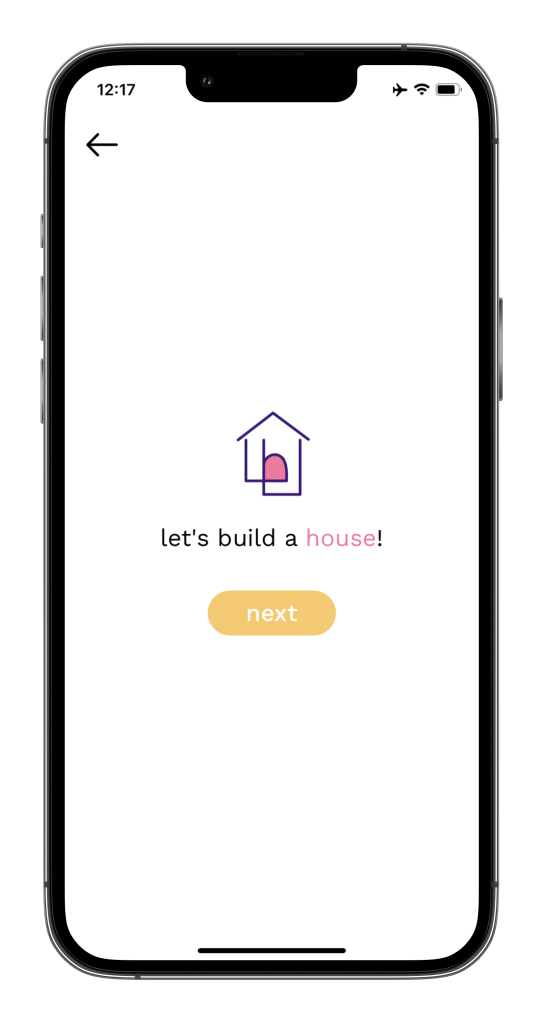
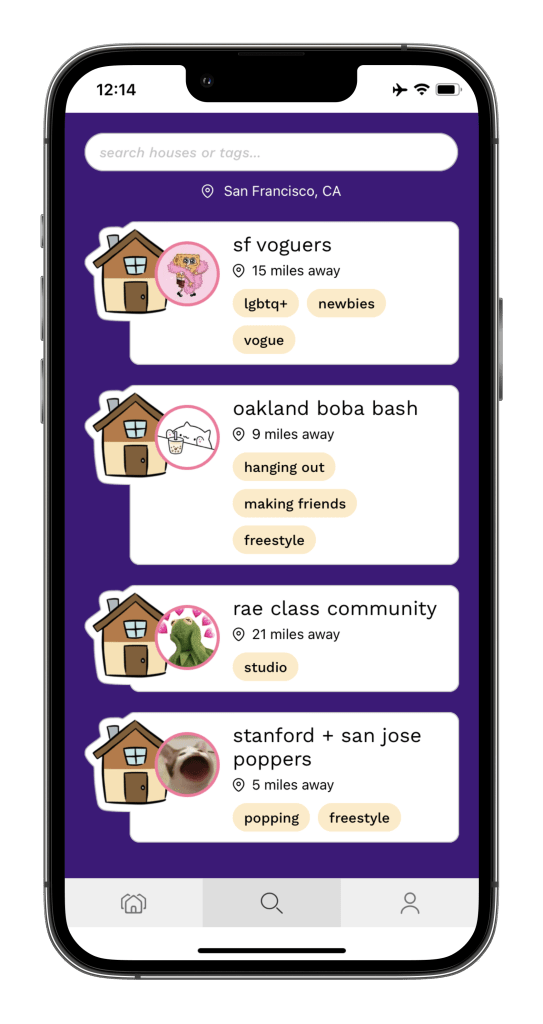
The solution we decided on was a mobile app that allows dancers connect with each other by joining groups called “houses”. Users can browse houses in the area around them via a public list and join houses to interact with community members, attend events and gatherings, and explore common dance interests.
Our key insight from our needfinding interviews was that dancers find comfort in a consistent group with common goals (structure and common ground). For our platform, we wanted users to be able to easily connect with these groups on the go, so we chose a mobile app. One alternate solution we explored focused on one-to-one interactions that limit communities to a physical space, but we wanted something that allowed for more flexibility in what activities the community does (dance together, messaging, hanging out, etc.). Considering these factors, as well as our other values (which we explore later in this report), we decided on our final solution.

Tools
Figma. We used Figma to visualize final changes to our med-fi prototype before implementing them in code.
Expo. We used Expo to test and run our high-fi prototype. Not only was it easy to run our code on our phones (simply scanning a QR code), but we could see real-time updates as we made changes to the code.
React Native. We used React Native as a framework for writing our code. It comes with a massive community of developers and countless packages that made coding a much smoother process.
Wizard of Oz Techniques
The user can only select San Francisco, CA as their location (in addition, they can only select this location when creating a house). We do not have any current users or houses to draw data from, and we decided it was not feasible to create a massive database of fake houses and users all around the world.
Hard-Coded Elements
We created JSON files containing information for houses and members in the San Francisco area, so that we could demonstrate how users can interact with houses and other users.
When the user creates a house, the house profile picture and one event are hard-coded into the house data, for consistency with how the other houses are displayed.
Final Deliverables
Github Repo
Demo Video
Presentation Poster

 Home
Home 